How to Start a Lawn Care Business
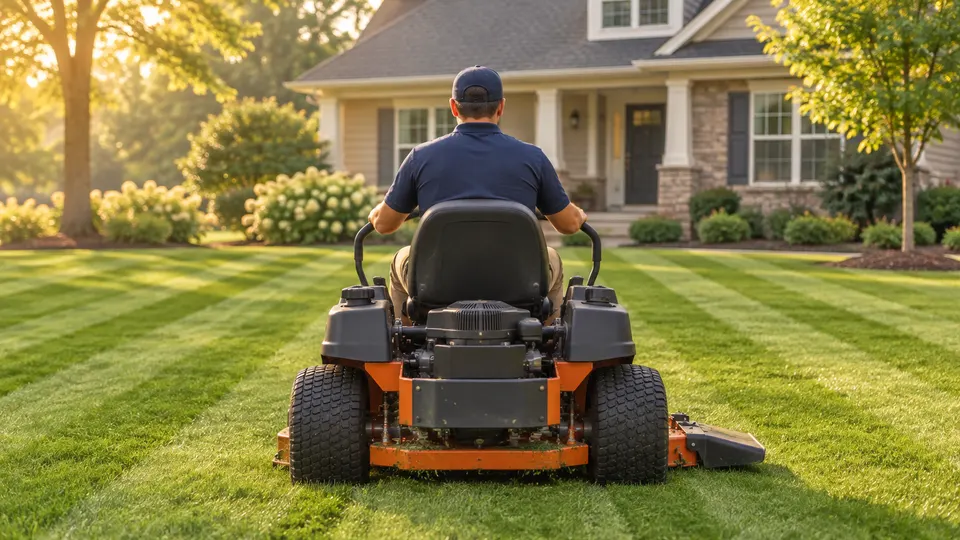
Quick Answer
To start a lawn care business, decide which services you will offer, then register the business, get a free EIN from the IRS and check your city and county license rules. If you will apply weed killer or any other pesticide for customers, get your state's commercial applicator license first. Buy reliable mowing equipment, get liability insurance, and build a tight weekly route of nearby customers.
On this page
- What services should a lawn care business offer?
- Do you need a license to start a lawn care business?
- How do you register a lawn care business and handle taxes?
- What equipment and insurance do you need?
- How do you price lawn care and find your first customers?
- How do you handle the off-season?
- Frequently Asked Questions
- Our Take
- Sources
Key Takeaways
- Mowing, trimming and cleanup usually need only general business registration, but applying pesticides for hire needs a state license in most states.
- BLS reports a median pay of $19.27 per hour for grounds maintenance workers in May 2025 and projects 5% job growth from 2025 to 2035.
- The IRS issues an EIN for free, and self-employment tax is 15.3% once net earnings reach $400.
- A dense route of customers close together saves fuel and drive time, which matters more than any single price.
- Lawn care is seasonal in most of the country, so plan off-season services or savings before you start.
Lawn Care Business startup costs at a glance
- Estimated range
- $9,239 to $14,104
- Based on
- Owner-operator mowing and basic lawn service route using a truck and trailer the owner already has; no employees and no pesticide or fertilizer application.
What services should a lawn care business offer?
Start with the services you can do well with the equipment you already own or can afford. Most new lawn care businesses begin with weekly or biweekly mowing, then add work that fits the same visits:
- Core service: mowing, string trimming, edging and blowing off hard surfaces.
- Seasonal add-ons: spring and fall cleanup, leaf removal, aeration, overseeding and mulching.
- Treatment programs: fertilizer, weed control and insect control. These are the services that often require a state license.
The line between mowing and spraying is the most important decision in a lawn care business, because it decides whether you need a state pesticide license. Many owners start with mowing and cleanup, then add treatments once they are licensed. If you want to grow into planting, hardscapes and design work, read our guide on how to start a landscaping business, which covers the larger version of this trade.
Do you need a license to start a lawn care business?
For mowing and cleanup, you usually need only the general registrations any small business needs. The SBA says license requirements "vary by business structure as well as by state, county, and municipality," and that zoning ordinances can apply even to home-based businesses [7]. Ask your city or county about a business license and about parking a trailer and equipment at home.
Pesticides are different. Federal law requires anyone who applies or supervises the use of restricted use pesticides to be certified, and certification programs are run by all 50 states. The EPA also notes that many states require certification to use any pesticide commercially, not only restricted use products [2]. BLS puts it simply: "Most states require licensing for workers who apply pesticides" [1].
Two official examples show how this works in practice:
| State | Who needs a license | Agency |
|---|---|---|
| Texas | Anyone applying any pesticide for hire to lawns, trees, ornamental plants or weeds; applying only fertilizer does not need a TDA license | Texas Department of Agriculture |
| Illinois | Anyone applying general-use pesticides for hire; lawn work falls under the Turfgrass category plus the General Standards exam | Illinois Department of Agriculture |
Sources: Texas Department of Agriculture [3] and the University of Illinois Pesticide Safety Education Program [4]. Rules, categories and fees differ in every state, so check your state department of agriculture before you spray anything on a customer's lawn.
How do you register a lawn care business and handle taxes?
Choose a structure first. Many owners start as a sole proprietor, which needs no state filing, and others form a single-member LLC to separate business debts from personal assets. Our LLC guides by state walk through the state filing and fees, for example how to start an LLC in Georgia or in North Carolina.
Then get an Employer Identification Number. The IRS says "You never have to pay a fee for an EIN," issues it immediately online when approved, and warns readers to "beware of websites that charge for an EIN" [5]. You need an EIN to hire employees, and it lets you keep your Social Security number off customer paperwork.
Plan for taxes from the first invoice. As of November 2026, the IRS sets the self-employment tax rate at 15.3% (12.4% for Social Security and 2.9% for Medicare), owed when net earnings from self-employment are $400 or more and figured on Schedule SE [6]. Some states also charge sales tax on lawn services, so ask your state revenue department how your services are treated.
What equipment and insurance do you need?
Buy equipment for the size of lawns you plan to serve, not for every possible job. The cost box on this page shows the sourced startup range for a lawn care business when our data is verified, and the startup cost calculator lets you test your own numbers. The usual cost categories are:
- Mowing: a commercial walk-behind or a zero-turn mower sized to your typical lawn, plus a backup push mower.
- Trimming and cleanup: string trimmer, edger, blower, and hand tools.
- Transport: a truck or other tow vehicle, a trailer, ramps and tie-downs.
- Safety gear: eye and hearing protection, gloves and boots, plus the protective equipment your pesticide label requires if you do treatments.
- Insurance: general liability for damage to customer property (a thrown rock through a window is a classic claim) and commercial auto coverage for the truck and trailer.
- Office: invoicing and scheduling software, a phone, and simple bookkeeping.
Buying good used equipment and keeping it maintained is often a better start than financing new machines before you have customers. A spare set of blades and a regular maintenance day keep breakdowns from costing you a full route.
Read the operator's manual for every machine before the first job, and train anyone who works with you on the same rules: shoes and eye protection on, debris cleared before mowing, and no riding mowers across steep slopes the manual warns against. If you hire help, you take on payroll tax and workers' compensation duties that differ by state, so set those up before the first paycheck.
How do you price lawn care and find your first customers?
Price each job by the time it takes plus your costs, then check that the result is in line with what local services charge. Time depends on lawn size, obstacles, slope, and how far the property is from your next stop. Use pay data only as a reference point for what your labor is worth in the market.
Time a few real jobs before you publish prices. Note how long the mowing, trimming, edging and blowing take on a small, a medium and a large lawn, then add the drive time to the next stop. Those three measured jobs give you a base price for each lawn size, and you can quote extras such as steep slopes, heavy leaf cover or overgrown first cuts on top. Keep the record going all season: the jobs that run long every week are the ones to reprice at renewal.
BLS reports a median pay of $40,080 per year, or $19.27 per hour, for grounds maintenance workers in May 2025. The lowest 10% earned less than $15.01 per hour and the highest 10% more than $28.10 per hour; the median for landscaping and groundskeeping workers was $18.82 per hour [1]. The same handbook counts about 1,299,200 jobs in 2025, projects 5% growth from 2025 to 2035, and lists 20% of these workers as self-employed.
To find first customers, focus on one or two neighborhoods. Customers close together let you mow more lawns per day with less driving, so route density is the main lever on your hourly results. Door hangers on streets where you already mow, a simple website with a quote form, neighborhood groups, and asking happy customers for referrals all build density. Offer seasonal agreements so customers stay with you all season instead of booking one mow at a time. For other service businesses with a similar route model, see how to start a cleaning business or browse all start guides.
How do you handle the off-season?
In much of the country, grass stops growing for part of the year, so a lawn care business needs a plan for those months. Common options are fall leaf cleanup, gutter cleaning, holiday light installation, and snow removal where it snows. Each new service brings its own equipment, insurance and sometimes local rules, so check them before you sell it. If you do not add winter work, set aside part of each summer payment to cover fixed costs like insurance and truck payments through the slow months.
Frequently Asked Questions
Do I need a license to mow lawns for money?
Usually not a special one. Mowing and cleanup generally need only the business license or registration your city, county or state requires, which the SBA says varies by location [7]. A state license comes in when you apply pesticides for hire.
Can I spray weed killer without a license?
Not for customers in most states. The EPA notes that many states require certification for any commercial pesticide use [2]. In Texas, for example, applying any pesticide to lawns for hire requires a Texas Department of Agriculture license.
Should a lawn care business be an LLC?
An LLC can separate business debts from personal assets, which matters in a business that works on other people's property with heavy equipment. Many owners start as sole proprietors and form an LLC as they grow. See our LLC guides by state for filing steps and state fees.
Our Take
We think the safest way to start a lawn care business is to begin with mowing and cleanup, get insured, and build a dense route before adding treatments. The official sources support that order: mowing usually needs only general local registration, while applying pesticides for hire brings a state license, exams and recordkeeping in most states. BLS projects steady growth for grounds maintenance work, which suggests real demand, but the pay data is a range, not a promise. We would spend the first season on reliable used equipment, tight scheduling and simple records, and get the state applicator license before selling any weed or insect control.
Sources
- Grounds Maintenance Workers: Occupational Outlook Handbook. U.S. Bureau of Labor Statistics, 2026.
- Certification Standards for Pesticide Applicators. U.S. Environmental Protection Agency, 2026.
- Applying Pesticides to Lawns, Trees, Ornamentals. Texas Department of Agriculture, 2026.
- Lawn Care Business Pesticide Licensing To-Do List. University of Illinois Extension, 2026.
- Get an employer identification number. Internal Revenue Service, 2026.
- Apply for licenses and permits. U.S. Small Business Administration, 2026.
This is general information, not legal, tax or financial advice. Fees, forms and rules change; confirm with the official agency or a licensed professional before you file. Spotted an error? Tell us.
Keep Reading

How to Start a Vending Machine Business
Start a vending machine business in the U.S.: register, open a sales tax account, check local licenses, vet sellers under FTC rules and sign a host first.

How to Start a Photography Business
How to start a photography business in the U.S.: pick a niche, set prices, get a free EIN, use contracts and copyright, and plan your first 90 days.

How to Start a Landscaping Business
How to start a landscaping business in the U.S.: pick services, check contractor and pesticide licenses, register, insure, price jobs and plan for the seasons.

How to Start a Dropshipping Business
How to start a dropshipping business in the U.S.: pick products, vet suppliers, register, handle sales tax and meet the FTC rule on shipping times and refunds.

How to Start a Coffee Shop: Costs and First Steps
How to start a coffee shop: choose a format and location, plan the main cost categories, get health plan review and permits, register, and hire your staff.

How to Start a Clothing Brand From Zero
How to start a clothing brand from zero: pick a niche and production model, check your name with the USPTO, meet FTC label rules and set up sales tax.